FAQ: How to Model a Spousal Loan
Modelling an Existing Spousal Loan
If the spousal loan already exists then you need to capture both sides of the loan. No amount needs to be added to investment accounts as this is already captured in the balances.
-
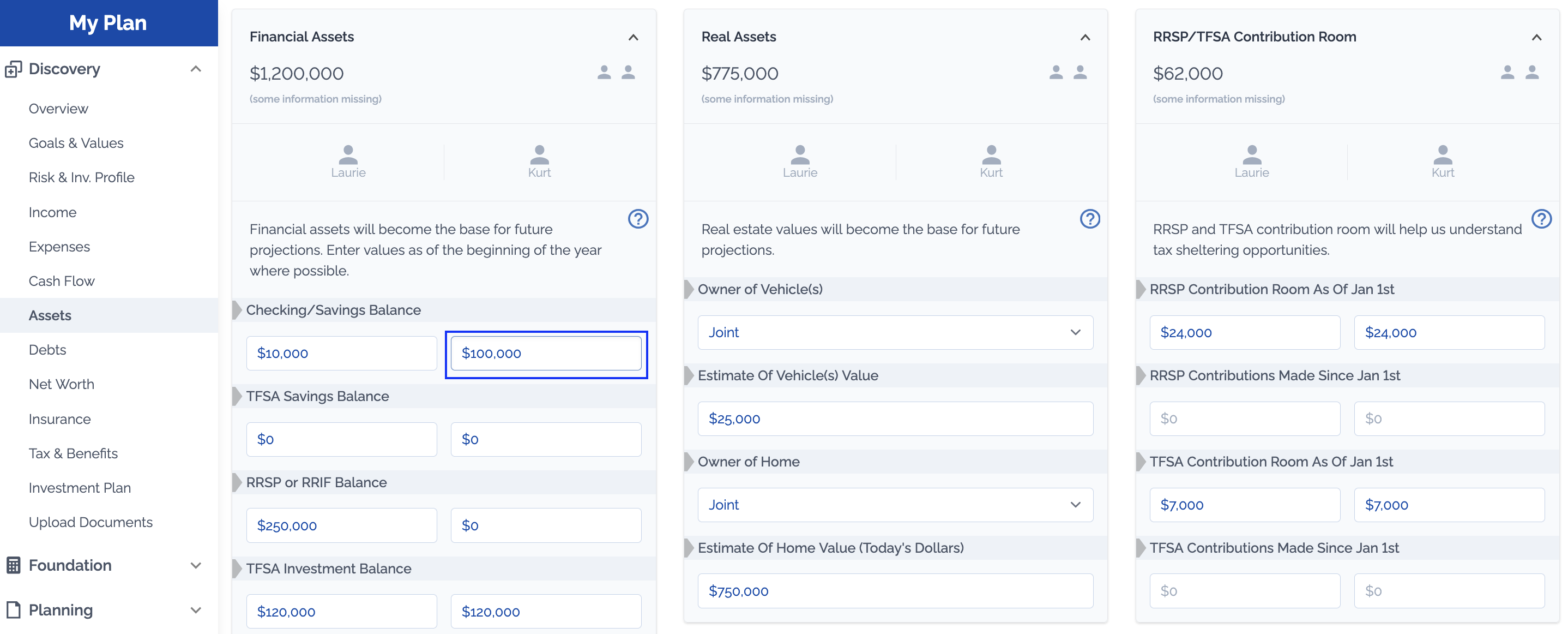
The spouse making the loan will add the loan balance to a “Savings” account in Discovery > Assets.
-
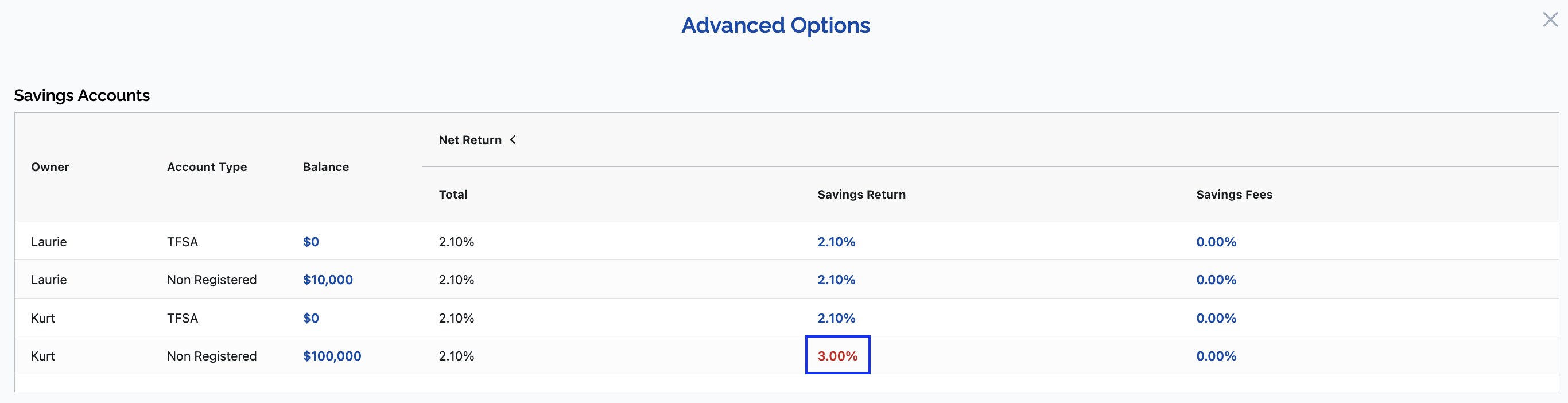
To capture the interest they receive, navigate to Planning > Projections > Advanced Options. You can adjust the rate of return assumption for the Savings Account by opening the Net Return column for the Savings account using the ">" arrow. Enter the interest rate for the loan. This ensures the taxable interest is captured.
-
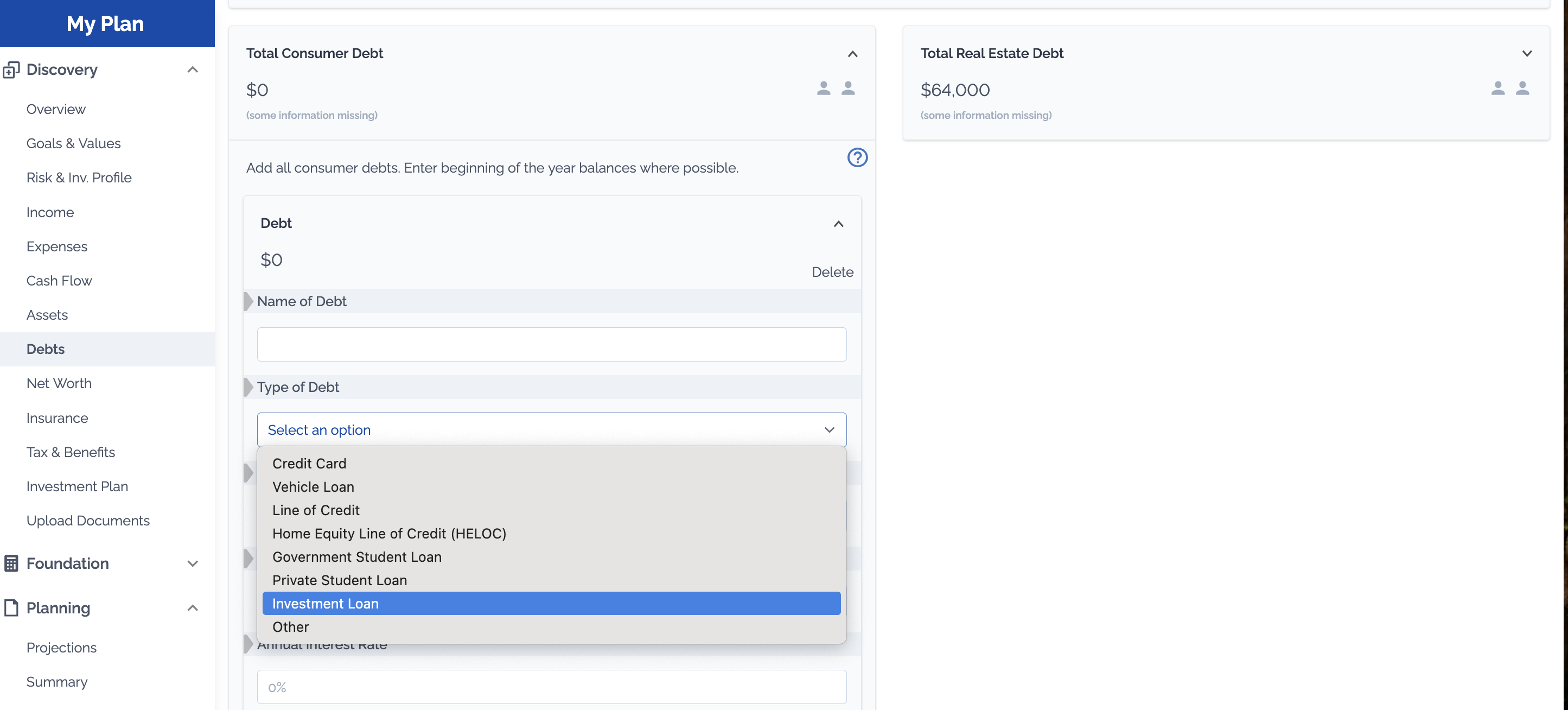
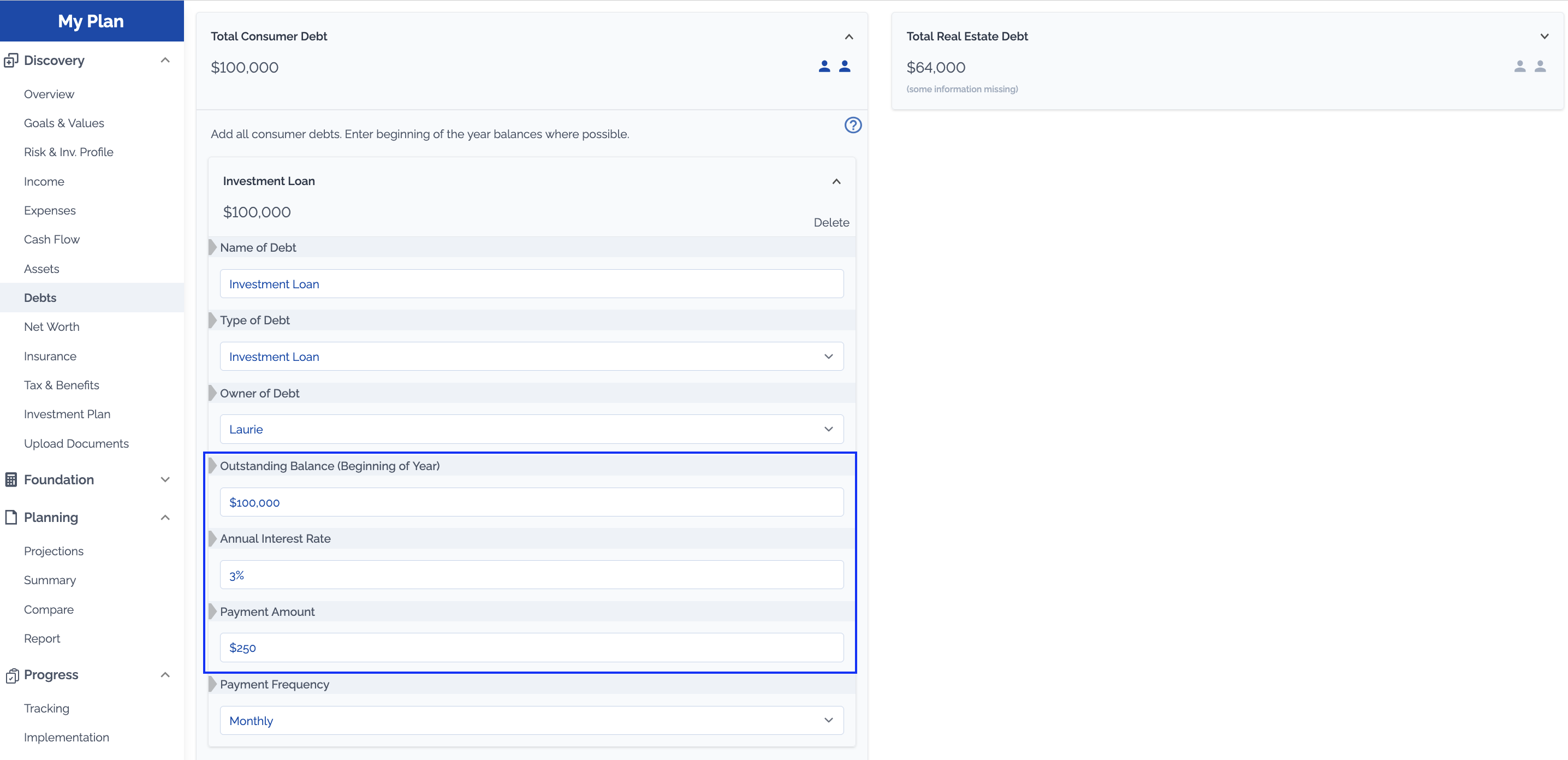
Now add the loan value being received by navigating to the Discovery > Debt section. Add an “Investment Loan” in this section. Make sure the type of loan is an “Investment Loan” so the platform knows this interest is tax deductible for the recipient.
-
Add payments to this Investment Loan that are enough to cover the interest
Modelling a New Spousal Loan
If this spousal loan is new then you need to set up both sides of the loan and also capture the contribution to an investment account.
-
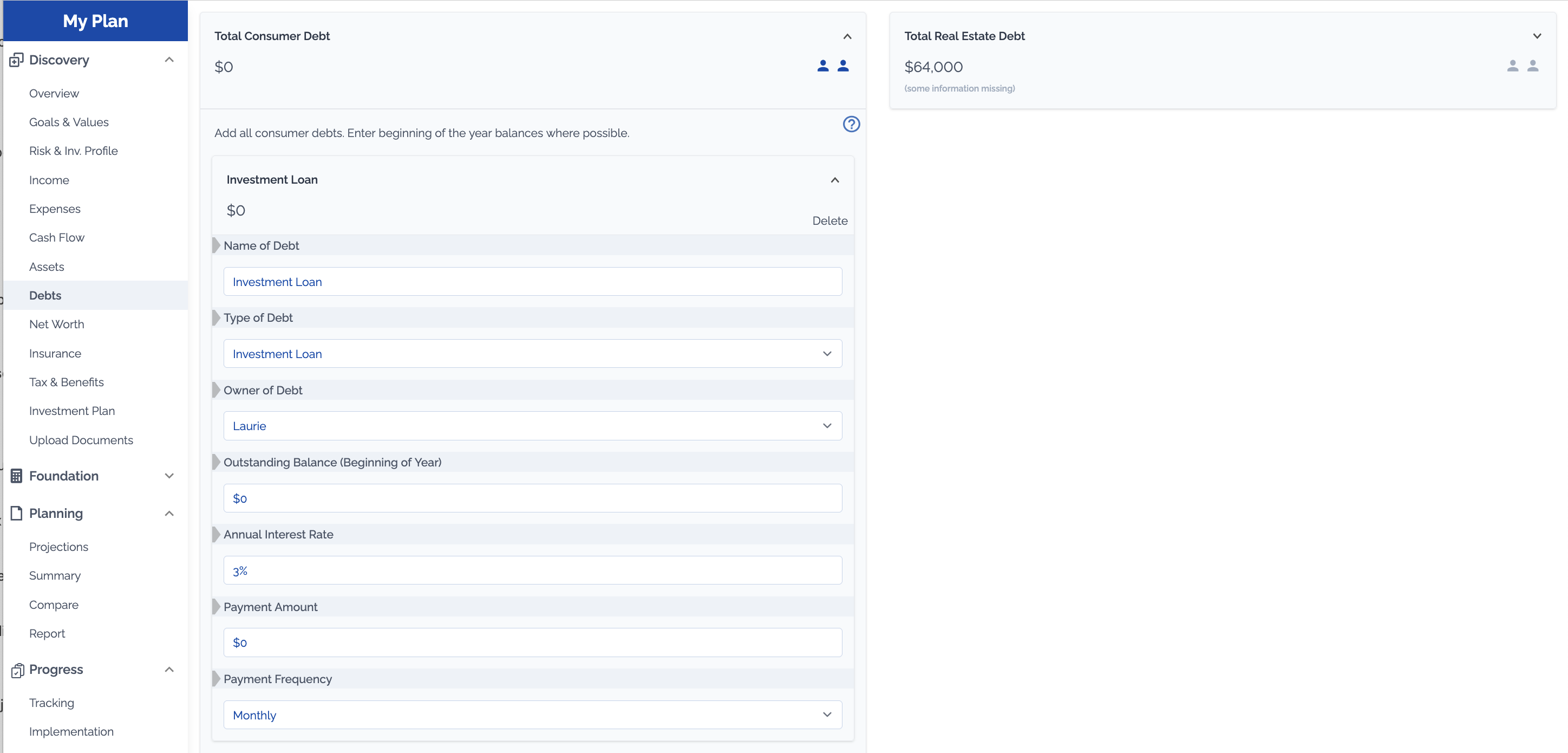
The spouse receiving the loan will include an “Investment Loan” in the Discovery > Debt section with $0 balance and $0 payments. Make sure the type of loan is an “Investment Loan” so that the platform knows this interest is tax deductible.
- The spouse making the loan will add the value of the loan to Discovery > Assets in the “Savings” account balance. They can adjust the interest rate in Planning > Projections > Advanced Options as shown in Step 2 above. This ensures the taxable interest is captured.
-
Then in Planning > Projections > Table add the amount to the "Investment Loan" as a negative withdrawal.
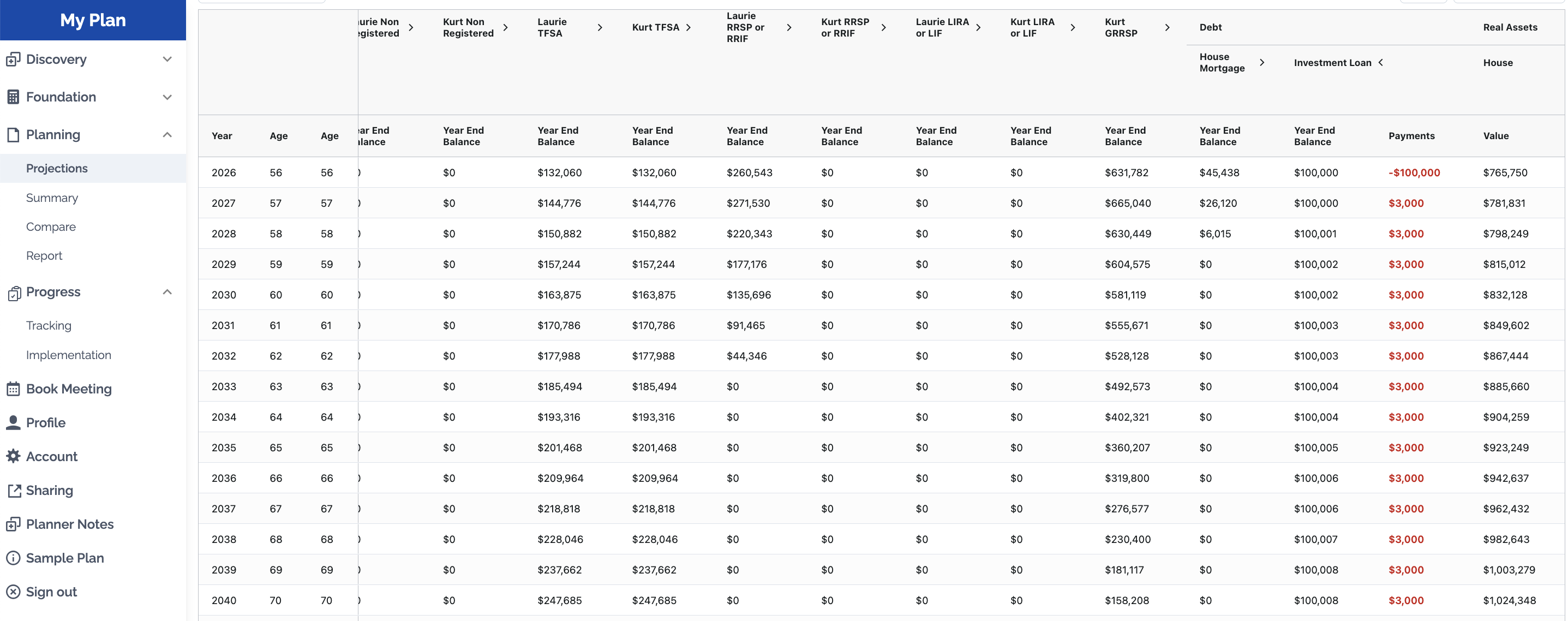
- Now, manually add payments that are enough to cover the interest and cascade that down to the end of the plan.
-
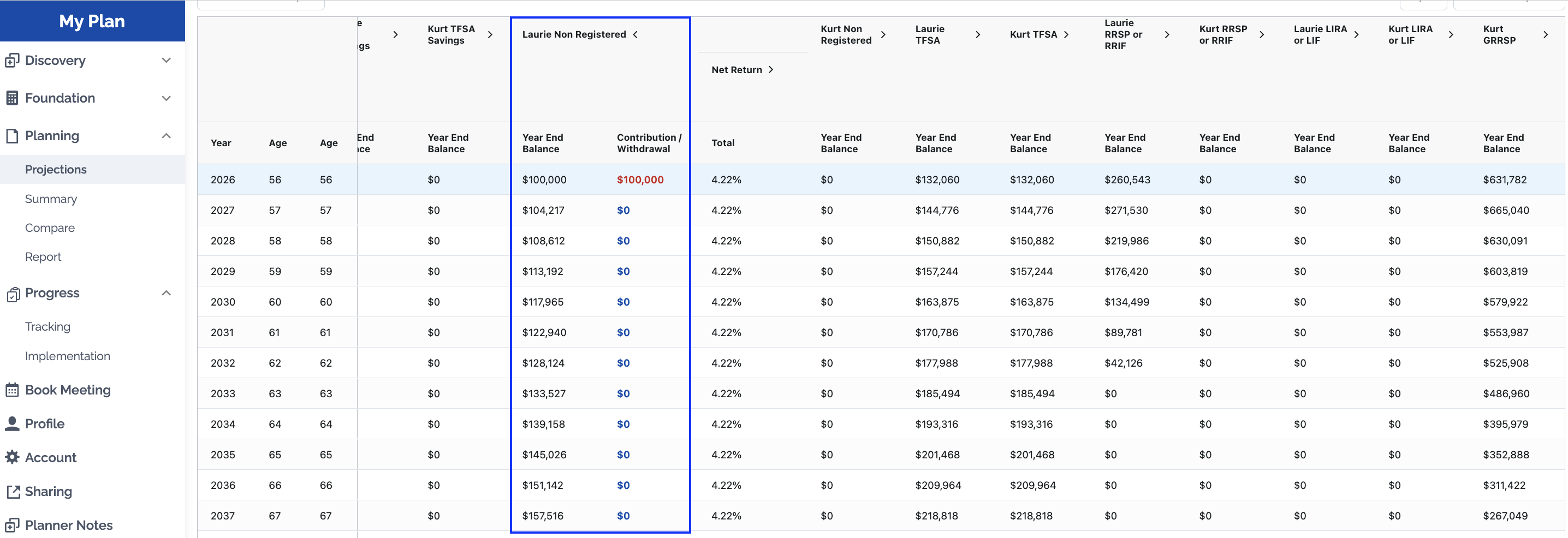
Last, in the Planning > Projections > Table ensure that the investment loan amount is going into the correct Non-Registered investment account for the spouse borrowing the money, using an override if necessary.